
The FCC is about to do something it hasn’t done since American Idol’s premiere in 2002 - revisit its Ultra-wideband (UWB) rules.1
Makes sense. The rules are really old, much has changed, and if there’s one point of consensus, it’s that the current regime is a huge pain. Parties seeking to deploy UWB tech struggle to fit in existing categories and comply with testing and measurement procedures. Incumbents get stuck tracking and responding to numerous waiver proceedings.
However, there’s a reason the FCC punted on this for so long; the 2002 UWB rulemaking was one of the nastiest spectrum fights of all time. It made Ligado look like people joining hands and singing Kumbaya.
So what exactly is UWB?
It’s a regulatory construct referring to devices occupying a large amount of spectrum at once (generally at least 500 MHz of bandwidth).
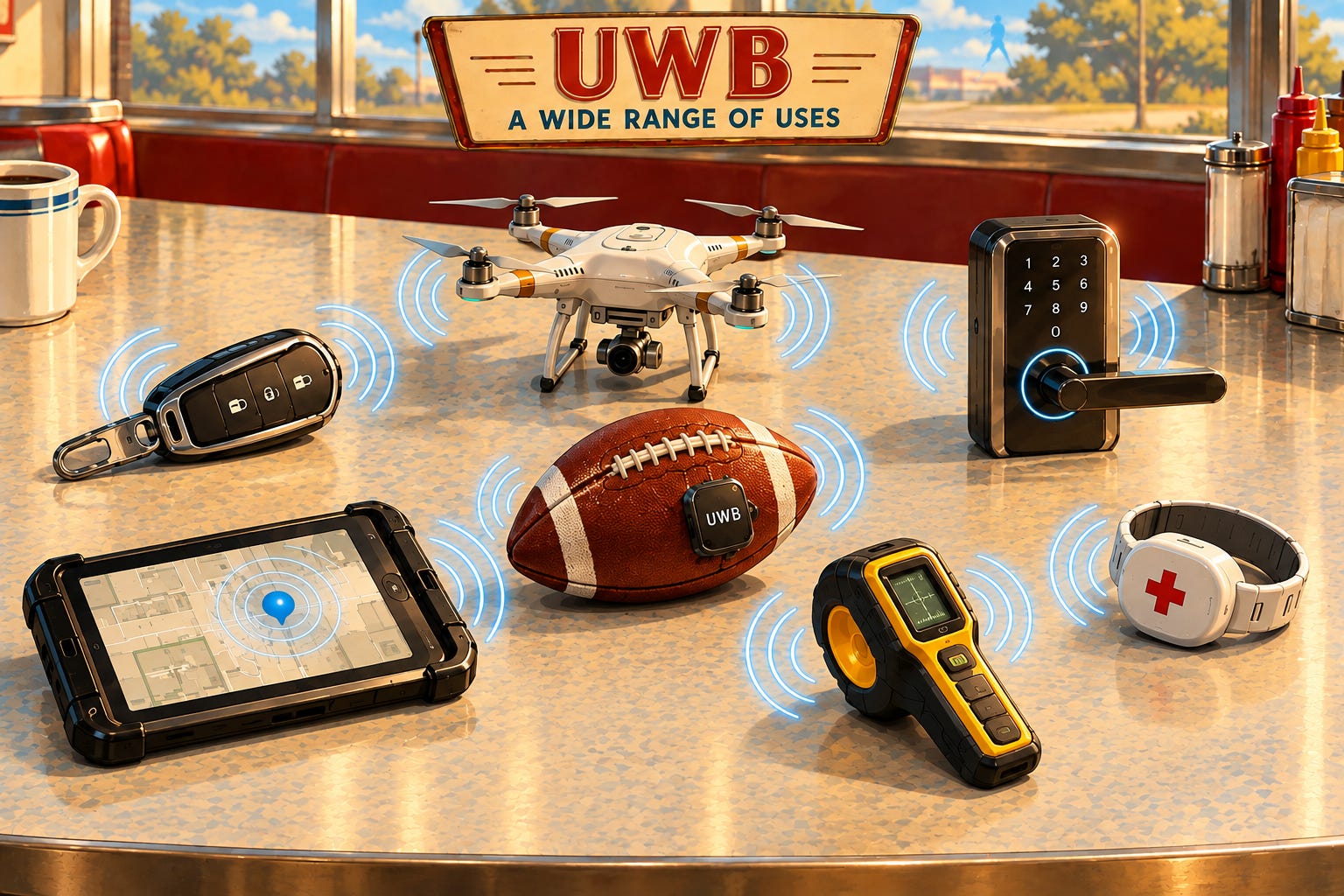
This pulls in a wide variety of technologies like smart door locks, parking garage spot trackers, tech for SWAT teams to see through walls, and sensors that show exactly where an NFL ref was when he made a bad call. It also has major potential for healthcare, logistics, and spatial computing, where it can map a room and its contents within a centimeter.
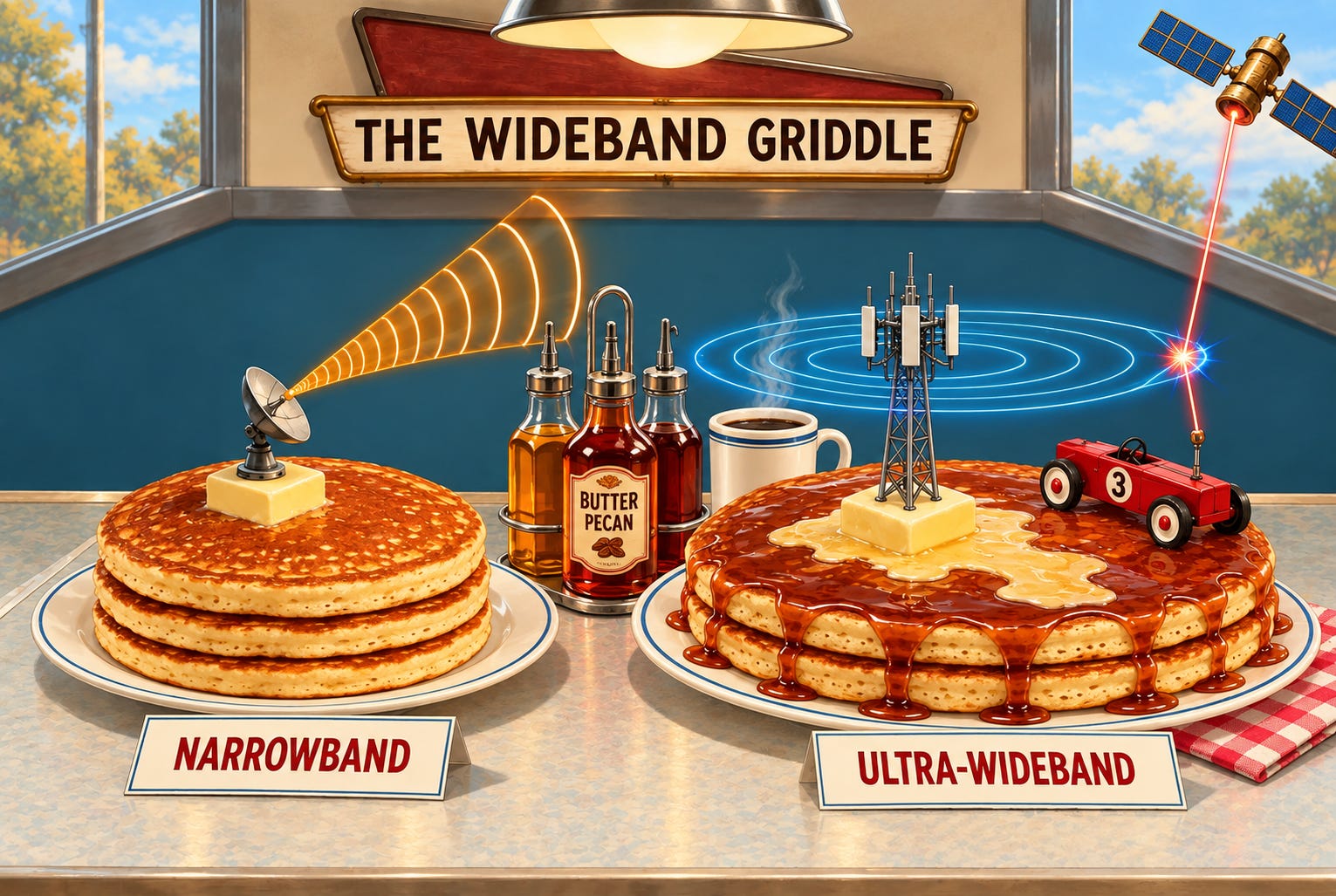
Here’s how it works. Think about transmitter power like ordering pancakes at IHOP. A conventional transmitter is relatively high power in a relatively narrow slice of spectrum: a dense dollop of butter in the middle of your pancake. Alternatively, a UWB transmitter is low power dispersed across a much wider band: the same butter spread over the whole thing.
In the view of UWB proponents, a little butter everywhere never hurt anybody. In the view of others, spreading butter where you’ve already poured IHOP Butter Pecan Syrup2 is too rich for your blood, especially when that spectrum supports safety-of-life systems like GPS, aviation, and search and rescue. Who is correct is a tough question that gives me heartburn.
While there isn’t time or space to review all the major implications of the UWB NPRM, I’ll leave you with three tasty questions to chew on as the proceeding continues:
What is a toy?
The Commission asks numerous questions about this, and rightfully so. The most obvious example of where this line gets blurry is with drones, but there are plenty of other questions to consider such as aggregate interference, scope of eligibility, preferred channels, and indoor vs. outdoor use. Commenters looking to persuade the Commission on any of these points would do well to articulate clear technical and operational limiting principles.
What is an AI device?
The Commission also asks whether AI-enabled sensing systems need their own UWB device category. The item references agentic AI and physical AI applications, and seems to implicitly ask whether robotic or other autonomous devices using UWB to map their surroundings, navigate, and act should really be regulated the same way as door locks or AirTags. Should adaptive devices get more flexibility because they can sense the RF environment, or tighter limits because they can operate with less human intervention? Not simple questions.
Where can you take UWB?
On paper, the NPRM seems open to modifying the ban on UWB operation on ships, aircraft, and satellites. It asks open ended questions about allowances for cruise ships, offshore platforms, inland water operations, and drone navigation and landing. However, the actual rule proposal in Appendix A would prohibit operation “onboard an aircraft, a ship not within inland waters, or a satellite.3 So parties who want to move that line shouldn’t just assume the FCC is onboard, and may benefit from proposing geofencing, channel, or altitude conditions that would make partially lifting the ban administrable for the agency.
Thanks for reading. I accept tips in the form of pancakes. If you have any real questions about understanding or participating in this proceeding, book a free consult with Perihelion Strategies.
Granted, there were some tweaks 03/04, but the core effort was 2002.
Delivering a rich, buttery, and nutty flavor. Available in stores or online in 24 ounces. Did IHOP pay me to say this? No, but let a boy dream.
Proposed revised § 15.521(a).