

Welcome to The Perihelion Moment, a monthly briefing on FCC and spectrum developments in TMT, satellite, and frontier space brought to you by Perihelion Strategies. Each issue covers what the Commission (or other relevant authorities) is doing, why it matters, and what it means for the people building and investing in this space. This is meant to start a dialogue, so feel free to email me about topics you’d like to see covered (ross@perihelionstrategies.com).
This month: the FCC's new Unlicensed Direct to Device item, a hidden opportunity for ISAM, Covered List expansions with implications for satellite and space manufacturers, and what to watch in August.
Loosening the Bands: Inside the FCC's New Unlicensed D2D Item
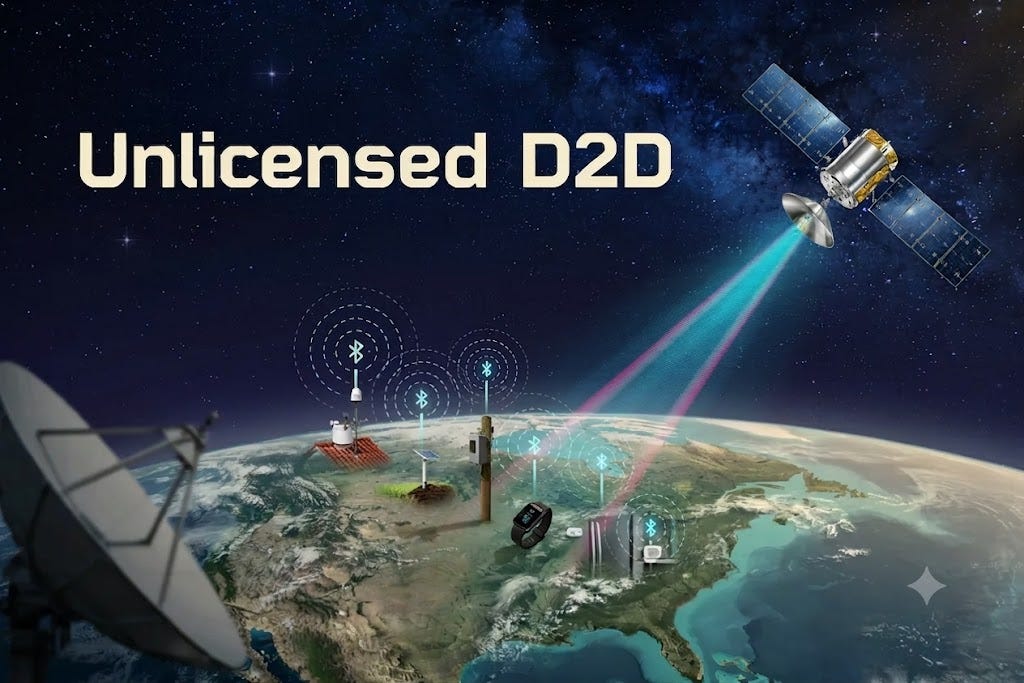
On July 16, the FCC released a draft NPRM focused on opening up frequencies in the 902-928 MHz,1 2400-2483.5 MHz and 5725-5850 MHz bands for use by unlicensed devices.
This item opens the door for satellites to not just connect to cellular enabled devices, but also to the vast ecosystem of consumer electronics and industrial applications that do not operate in cellular frequencies and instead use unlicensed technologies like Bluetooth and Wi-Fi.
It specifically proposes to enable comms from Earth-to-space in all three bands but to only allow operations from space-to-Earth in the 5 GHz band. Worth noting that these bands are already heavily utilized for unlicensed operations, which means it’s a logical choice for unlicensed D2D, but WISPA, the trade association representing fixed wireless internet providers has already filed in opposition, citing interference risk, and resistance regarding the 5 GHz downlink segment is highly likely.
For those who have been tracking the FCC NextNav proceeding (a separate, contentious FCC proceeding about opening new spectrum for 5G and supplemental GPS services), it’s interesting that the FCC identified the 900 MHz band for unlicensed D2D, though it’s not clear what impact that will have on NextNav’s proposal for modified co-channel operations.2 For its part, NextNav has expressed theoretical support for Unlicensed D2D but is understandably playing defense.
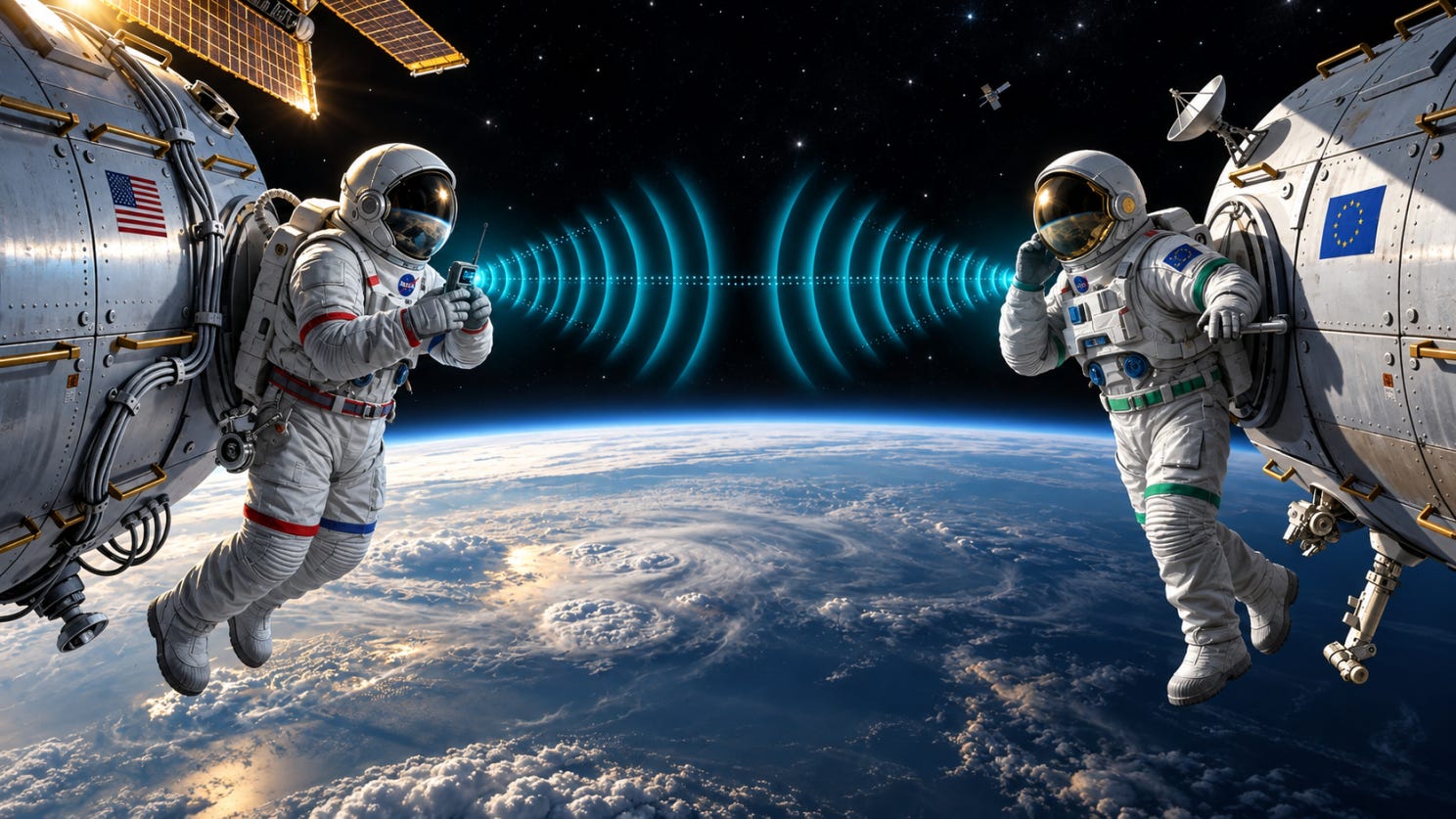
But there is other completely unrelated fun stuff buried in this item. Namely, the FCC is (1) proposing to allow unlicensed operations inside spacecraft, and (2) asking about how it could enable unlicensed operations outside of spacecraft.
ISAM Loading
It makes sense that the Commission is closer to finalizing rules for inside spacecraft than for outside of them. Spectrum operations inside a spacecraft are largely contained within the spacecraft without causing interference to satellite communications. Most of the signal gets blocked from going outside due to the exterior shielding on the spacecraft that is designed to protect astronauts from space-based radiation.
But the more nascent and economically significant opportunity the Commission is teeing up relates to ISAM - In-space Servicing, Assembly, and Manufacturing.
These are the growing segments of the space economy that aren’t centered around satellite communications. This is about tugging things between different orbits, creating specialized pharmaceutical compounds and fiberoptic cables that can only be built in microgravity environments, setting up in-space gas stations, and building private space stations.
According to the Commission, it also refers to “space objects and celestial bodies, and in transit between these regimes” which means it’s not just about systems in orbit but also potentially lunar and martian operations.
Right now, there is a shortage of available spectrum - both licensed and unlicensed, that can be reliably used for ISAM operations. The Commission is working to fill that void - on the licensed side in the Weird Space Stuff proceeding (a topic for another day), and on the unlicensed side in this proceeding.
This is complicated - unlike inside a shielded spaceship, if not properly operated, spectrum used in the vacuum of space can travel vast distances, interfere with other services, and raise thorny treaty issues.
So the FCC is in an exploratory phase, asking questions like which frequencies would make the most sense, how much power would they need to operate, and what types of applications would communicate between different spacecraft.
Part of what makes this exciting is that it is a blank slate. The rules are totally up for grabs, and the companies that show up now with technical comments describing their actual operational needs are the ones most likely to shape what gets adopted.

Tightening the (Supply) Chain: The FCC Closes the Component Part Loophole
If the Unlicensed D2D item was like a pizza party for the space tech industry, this month’s supply chain tightening actions were more like a colonoscopy.
On July 22, the FCC adopted a Third Report and Order expanding its national security review of components as part of its equipment authorization regime. The most critical change is that a device can no longer receive FCC authorization if it contains a "logic-bearing hardware component," meaning a chip, module, or other programmable element produced by a banned entity like Huawei or ZTE, even if a completely unrelated, uncontroversial company assembled everything else. The test the Commission adopted is simple to describe, but painful to implement: if the banned entity had made the whole device, would it be prohibited? If yes, a device with just their chip inside it is prohibited too.
This closes what the Commission referred to as the “component part loophole,” and it shifts the compliance question from “who made this device” to “who made the digital device components inside the chip,” which is a much harder question for manufacturers utilizing globally sourced supply chains to answer.
The Commission also formally pulled online marketplaces like Amazon and eBay into its enforcement net, requiring verified FCC IDs at the point of sale and rejecting Section 230 defenses; expect litigation there.
A companion Further Notice, issued alongside the Order, previews where this goes next: software and hardware bills of materials, extending the same component-level logic to software and firmware, and a U.S.-based liable party requirement. Comments are due 30 days after Federal Register publication.
Separately, on July 28, the Commission added foreign-produced humanoid and quadruped robots and foreign-produced power inverters to the Covered List, extending its national security reach well beyond telecom hardware and into robotics and grid equipment.
For anyone in the satcom hardware business who hasn’t yet mapped their chip-level supply chain, the clock on that exercise just started ticking. Speaking of which…
What to Watch in August
Keep the FCC’s August 6 Open Meeting on your radar.3 It’s when the Commission votes on Unlicensed D2D, so we’ll get a vote on a final version and also see if Carr makes any remarks sending signals to the ISAM industry upon adoption.
Also worth tracking: NextNav’s proposal has been parked at OMB for interagency review since March, with a House Appropriations rider in the mix trying to block any funding for a 900 MHz rulemaking. Will it finally get to come out and play during the August recess?
And a smaller note given this issue’s equipment security theme: DARPA’s Lift Challenge, a $6.5 million heavy-lift drone competition tied to the Pentagon’s Drone Dominance push, runs August 2-9, a reminder that the same UAS ecosystem facing tighter Covered List scrutiny is also being pushed hard to scale capabilities.
About
Ross Slutsky is the founder of Perihelion Strategies, Limited (PSL), an independent FCC regulatory strategy and intelligence firm that helps operators and investors understand what the FCC is doing, engage it effectively, and position themselves to win at the moments that determine outcomes. Before founding PSL, Ross spent time at the Commission, in big law, and in-house at a leading global satellite operator. In his downtime he enjoys film, family activities, and flying trapeze.
The Perihelion Moment is published monthly by Perihelion Strategies, Ltd. Nothing here is legal, financial, or investment advice.
Note - Ross subsequently learned while attending the FCC’s August Open Meeting that the Commission opted to eliminate the 900 MHz band from the Unlicensed D2D proposal.
See note 1.
Again, see note 1.
(Last edited Aug. 6, 2026.)