



Welcome to The Perihelion Moment, a monthly briefing on FCC and spectrum developments in TMT, satellite, and frontier space brought to you by Perihelion Strategies. Each issue covers key things the Commission (or other relevant authorities) is doing, why they matter, and what it means for the people building and investing in this space. This is meant to start a dialogue, so feel free to email me about topics you’d like to see covered (ross@perihelionstrategies.com).
This month’s focus: the FCC’s new Space Launch Spectrum Public Notice, a forthcoming fight between airspace and outer-space interests, further FCC expansion into nat sec industrial policy, and what to watch in September.
We’re off to see the Chairman
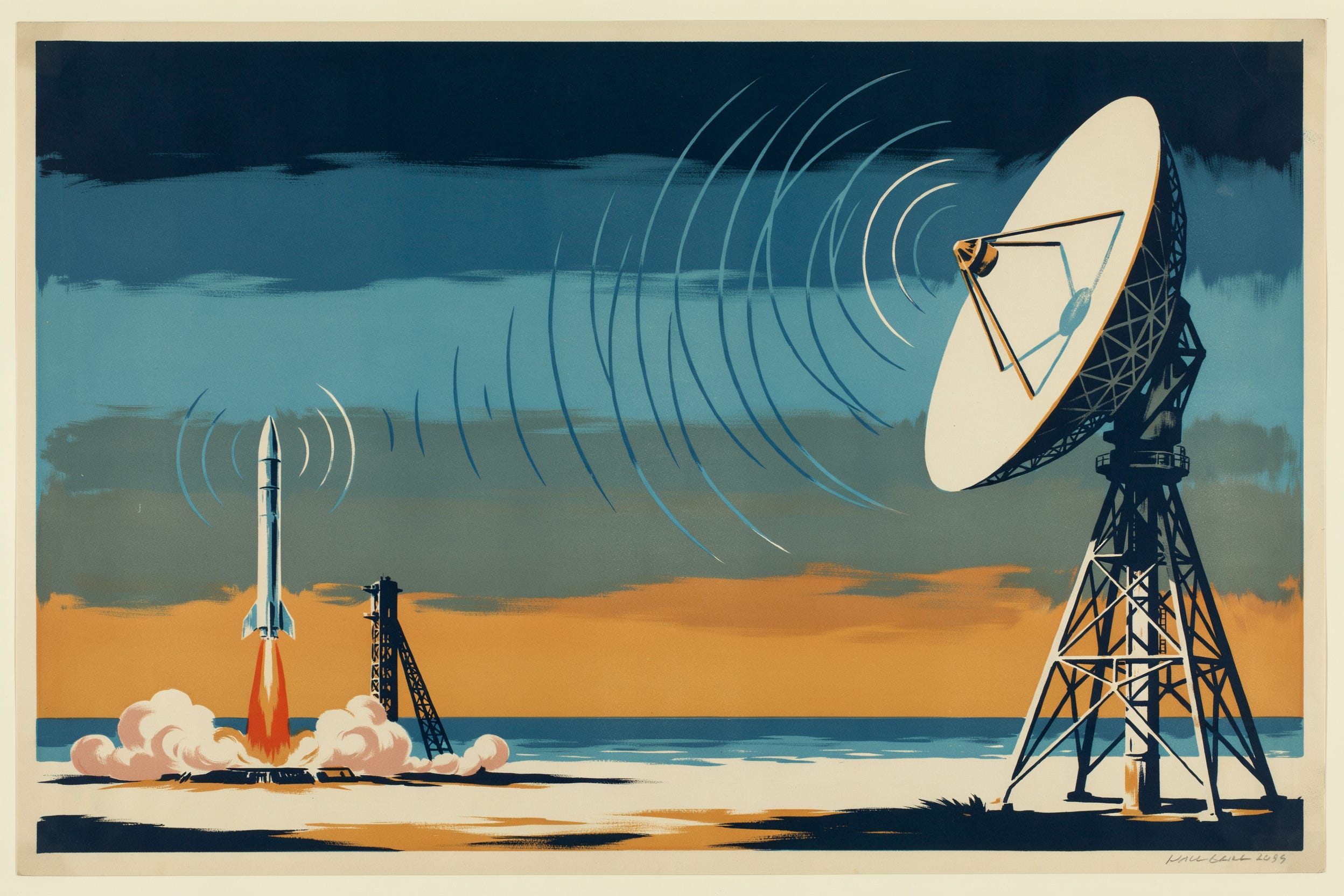
On August 25, the FCC released a Public Notice (DA 26-887) seeking comment on ensuring spectrum access for space launch activities.
This item comes less than a week after the White House released a presidential memorandum (NSPM-17) seeking to increase U.S.-based launches to at least a thousand per year (aka 5x more annual launches). Several things worth noting.
First, this isn’t a new issue - in recent years, the FCC has worked on opening several spectrum bands to support space launches, though often on a secondary basis (i.e. lower quality access than incumbent users). Also worth noting this is just a Public Notice and isn’t immediately proposing new rules.
Second, the item takes a wide lens by asking not only about spectrum access for rockets, but also for uncrewed surface vessels (USVs) and uncrewed aircraft systems (UAS) that support the launches.
USVs are things like the autonomous spaceport drone ships that recover rocket boosters at sea and haul them back to land. Drones tie up loose ends (e.g., rocket and pad inspections, post-launch damage surveys, and perimeter patrols).


Opening Bell
Third, at the bitter end, the Public Notice seeks comment on a petition by the Commercial Space Federation (RM-12025) asking the FCC to revisit spectrum sharing rules for plane, missile, and drone flight testing in the 1435–1535 MHz, 2360–2395 MHz, and 5091–5150 MHz bands. The Public Notice characterizes the petition as “[advocating] for increased efficiency within the existing coordination process.”
That line is a masterclass in understatement. The petition asks the Commission to completely cut the existing coordinator, the Aerospace and Flight Test Radio Coordinating Council (AFTRCC), out of the coordination process and shift to a light touch, database-centric approach.
CSF does not mince words, and says AFTRCC “monopolizes access to spectrum… and [has] begun to introduce obstacles that exemplify an antiquated, sclerotic process” contrary to Congressional and FCC objectives.
The timing is noteworthy. Many petitions for rulemaking collect dust for years. This one got folded into a live proceeding three weeks after filing. How this plays out remains to be seen, but it has all the makings of a major fight between rocket launch companies and aviation/defense primes.
In the words of the late great Apollo Creed, ding ding.1


Now Hiring
There’s been a lot of press lately about the Covered List turning the FCC into a national security agency, and rightfully so. It enables the administration to quickly and categorically ban foreign produced technologies in critical industries that contain radio frequency components - such as drones, robots, and inverters.2 Moreover, Reuters has reported a potential ban on imported optical transceivers (a key data center input), and there’s broader speculation that IoT modules, medical devices, and smart meter technology could soon follow.
The FCC’s Office of Engineering and Technology (OET) is responsible for implementing Covered List bans, which is ironic given it used to be best known for having developed hands-off rules that enabled permissionless innovation and gave birth to WiFi and Bluetooth.
OET is a small office with far more engineers than lawyers. But the Commission is now planning to expand OET’s policymaking division by hiring three “national security attorneys… to help write the regulations governing the Covered List” and “generally protect national security in the equipment authorization program.”
This is a major investment by the agency and a clear signal to the market - more rules are coming.

What to Watch in September
Some fun reg dates to ease your back to school blues:
September 4. Comment due date for the DOJ and DHS interim final rules implementing the SAFER SKIES Act, which lets state and local law enforcement do the thing most of the Communications Act was designed to prevent - cause deliberate radio interference.
September 14. It’s when comments are due on the Space Launch Spectrum PN discussed above - including the Commercial Space Federation’s petition coming for AFTRCC. Worth watching whether CSF expands its ask in wake of NSPM-17, how the opposition responds, and whether DoW or NTIA weigh in on this. Replies are due the 24th.
September 8. Comments close in the equipment authorization docket (ET Docket 21-232) that expands component coverage, and it’s also the due date for reply comments on the Upper C-band auction proceeding (GN Docket 25-59).
About
Ross Slutsky is the founder of Perihelion Strategies, Limited (PSL), an independent FCC regulatory strategy and intelligence firm that helps operators and investors understand what the FCC is doing, engage it effectively, and position themselves to win at the moments that determine outcomes. Before founding PSL, Ross spent time at the Commission, in big law, and in-house at a leading global satellite operator. In his downtime he enjoys film, family activities, and flying trapeze.
The Perihelion Moment is published monthly by Perihelion Strategies, Ltd. Nothing here is legal, financial, or investment advice.
RIP, Carl Weathers.